- Get started
- Learn the Program
On this page

Your donation can help us create more episodes of the Living Well with Multiple Sclerosis podcast. Support us now.
Donate Now
Don’t miss the latest news, tips & resources
Subscribe now S8E5: Webinar Highlights – Expert Insights – Change your life, for life with Laura Crowder and Hayley Baker
Listen to: S8E5 Webinar Highlights - Expert Insights - Change your life, for life with Laura Crowder and Hayley Baker
Your donation can help us create more episodes of the Living Well with Multiple Sclerosis podcast. Support us now.
Donate Now If you’ve ever felt stuck between knowing what could help you live well with MS and actually making it stick, this conversation is for you.
In this episode of Living Well with MS, Overcoming MS Program Facilitator Laura Crowder explores the ‘change your life for life’ pillar, the inner work that helps make lifestyle changes feel sustainable rather than overwhelming. Laura is joined by Overcoming MS Program Facilitator Hayley Baker, who shares her personal experience of building confidence, resilience and self-compassion while following the Overcoming MS Program.
Together, they reflect on why mindset matters, how hope and empowerment can support wellbeing, and what to do when life inevitably knocks you off track.
This episode is a webinar highlights special – originally recorded as a live Overcoming MS webinar and now edited for the podcast to bring you the key insights, questions and takeaways in one place.
Watch the full webinar on YouTube. Keep reading for the topics, timestamps, and our guest’s bio.
Topics and Timestamps
00:58 Exploring the pillar: Change your life for life
04:36 Choice, autonomy and taking control after diagnosis
09:56 The role of hope in living well with MS
12:37 Awareness, acceptance and managing difficult days
16:02 The power of language in habit formation
21:13 Empowerment and making lifestyle change sustainable
22:45 Community support and shared experience
25:36 Hayley’s personal journey with MS
35:01 Advice for people new to the Program
37:50 Q&A: common challenges, motivation and self-compassion
Episode Transcript
Read the episode transcript
Laura Crowder (00:38)
My name is Laura Crowder. I’m an Overcoming MS Facilitator, teacher and health we’ll be exploring the pillar of change your life for life. We’ll also be welcoming community member and trainee facilitator, Hayley Baker who will be sharing her own experience of the Change Your Life Four Life Pillar
Now, when I first started following the Overcoming MS programme, I jumped in feet first and started making changes to my diet, supplementing with vitamin D, after a while introducing physical activity and doing my best with stress management whilst trying to also help my family, especially my children, to make changes too. But after all, I found that it was getting really tough and it almost felt like it was becoming a struggle rather than a lifestyle. So of course I felt there must be something wrong with me. Luckily I was fortunate enough to attend the Overcoming MS retreat in 2018 at Ammerdown and following a few things that happened on that retreat, I went home and reread the original Overcoming MS book, which is when I properly discovered Pillar 7. And for me, Pillar 7, which is Change Your Life for Life, is a foundational pillar which actually provides us with a blueprint of how to make the changes outlined by these first six pillars. So today I’m really excited as we’re going to have a deep dive into Pillar 7 Change Your Life for Life and find out what it’s all about. Now, coach, I get lots of people who are really interested talking to me about health, not just clients, but people I encounter in day-to-day life. And I always find that people are really quite clear what it is they could do to be healthier. But they always say to me, I just don’t do it. And I was exactly the same. for me, is where change your life for life was such a game changer, because it actually helped me to see how I could make these changes.
We’ve obviously got the dietary changes, a whole foods, plant-based diet with fish if you choose, supplementation with vitamin D, or if you’re lucky enough to live somewhere where there’s lots of sunlight, getting your vitamin D naturally, physical activity, stress management, family health and medication Now, all of those first six pillars, I always see them as quite concrete things, things we can kind of say, okay, I understand this, I know what I need to do. Whereas, is much more of an abstract concept for many people.
And I believe the reason it seems so abstract is because whereas the changes that are outlined by the other pillars involve actually doing things physically or interacting with our environment, pillar seven is much more inner work.
When the Overcoming MS programme speaks of positivity, it’s linked to resilience and it’s linked to how we perceive our lives, how we perceive the diagnosis.
And it’s about accepting all of our feelings. Whereas I think toxic positivity almost assumes that we don’t feel negative emotions. And that couldn’t be further from the truth with the Overcoming MS program. I have good days, I have bad days. But one thing that Pillar 7 has taught me is how to manage better on those bad days.
And hopefully we’ll be able to bring that more to life for you in today’s session.
Now life teaches us that we have a choice to embrace a healthy lifestyle. No one is forcing us to follow the Overcoming MS programme. It’s a choice that we make ourselves. And that is so empowering. We’re taking control of our health. Now, events like a diagnosis of MS, and there are many other events in life that sadly we have no control over but we can choose how we respond to events such as a diagnosis of MS. And also we can choose how we perceive them. So let’s little bit more detailed quote from a report by the World Health Organization that they produced in 2023 and it’s all about patient education and involving patients in their care. You may, if you live in the UK like I do, you may have heard the term supported self-management. It’s really big in the NHS at the moment and other health services around the world are actually bringing in things you might have heard of self-activation if you live in the US, very, very similar. And it’s all about autonomy, about taking control. And as we said, choosing to take control of our health. Now, this is not just something that Professor Jelenik wrote about in his book.
This is actually like the rest of the program, backed up with many studies. There is a lot of research showing that when people feel as though they are in control and they feel as though they are choosing to do something about their health, that it actually does impact their wellbeing in a positive way. And again, I mentioned positivity as a part of Pillar 7 and it’s here as well.
This idea that by taking control, by choosing to follow a program like Overcoming MS and taking control in response to the diagnosis of MS, that we are actually able to positively impact our wellbeing.
In Overcoming multiple sclerosis, Professor Jelinek explains that we actually have power over how our bodily cells behave. This is where we talk about, you’ve probably heard about the mind-body connection. And there is a wonderful study that was conducted at Yale University, which I feel illustrates this so powerfully. So the study involved a group of participants and they split the group into two halves. Now they gave same milkshake but they told the first group that they were drinking an indulgent 620 calorie milkshake whereas they told the second group that they were drinking a super healthy 140 calorie shake. Now they did some tests on the participants and they found participants who thought that they were drinking the indulgent 620 calorie shake actually a significantly steeper decline in the so-called hunger hormone ghrelin than the participants that drank the perceived 140 calorie shake. So the cells in the body actually responded to the number of calories that they perceived were in the milkshake rather than the actual number of calories that were in the shake. And this is incredible.
I have another quote here. Now this was from a very large report that was conducted into 2011. Looking at whether it was worthwhile, health authorities supporting patient self-management and look at what they found. How people think and feel about their condition can have a big impact on their health behaviors and outcomes. And this is especially important for people with MS. You may already know that stress can play a part in relapses for people who have relapsing remitting MS. And certainly studies show that stress isn’t good for anyone. Stress is inflammatory within our bodies and it’s linked to all sorts of health conditions, both chronic and acute. studies have shown that our perception of stress is actually more harmful than the stress itself. So in other words, if we choose how to perceive events, and if we choose not to view events as being harmful, then that can actually positively impact our health. And there’s lots of evidence to support this. The Overcoming MS website has many of these studies, if you would like to read them in more detail. I had no idea how important the mind-body connection could be,
Realistic hope is crucial, not just for coping with the uncertainty of life after a diagnosis of MS, but also with the fear that that can generate. I remember being diagnosed myself and I remember being absolutely terrified. I literally felt as though my whole world had turned upside down.
And studies show that hope itself has stress-buffering effects for people with MS. So I’ve picked this quote off the Overcoming MS website because I absolutely love it. person following the Overcoming MS program carries with them their own unique story of hope. I actually am lucky enough to count myself as one of those people now. There are so many of these stories presented on the website and in the book.
Hope is a vital part of the overcoming MS programme. when I’m working with clients, not just clients with MS, I always ask people at the beginning of their journeys to try and identify what I call some change mentors. People who inspire you.
Ideally, at least one of these people will be someone who is in a similar position to you. So for many of us that will be someone who has a diagnosis of MS. finding someone who is in a similar position to you, who is achieving something that you are aiming for, or who is living well.
after their diagnosis. It can be so important. I like to think of the Roger Bannister effect, where Roger Bannister, if you don’t know the story, was the first person to break the four-minute mile, which in those days was seen as impossible. Yet after he achieved it, countless people have gone on to achieve it, and now it’s almost normal. So having that change mentor, that person who can inspire us and fill us with hope is so important when we’re on this journey. And it’s a powerful antidote to that uncertainty and to that fear that we can feel after a diagnosis. And Professor Jelinek explains that it’s also vital to gaining control over the illness and to help us feel empowered,
He says that finding that hope that it is possible to influence the course of the illness is vital. And as we always say, we’re not talking about a cure for MS, but about living well after a diagnosis of MS. So see if you can find some change mentors to help you on your journey.
The stress management pillar can be so important because if you are like me and you’re living an incredibly busy life and you’re rushing around, I know one of our pre-submitted questions links to this. It can be really hard to actually take the time to sit and focus on awareness. The stress management pillar of the Overcoming MS programme gives us this opportunity. And certainly it was the pillar that I overlooked as well as pillar seven initially. I thought, oh, it’s too difficult. I can’t meditate. was stuck in a very, very negative mindset. But certainly by getting in touch with my mind and getting that mind-body connection through the practice of awareness has really helped me to understand myself so much better and has really helped me to make the changes outlined by the Overcoming MS programme. Also, it’s key if we are holding on to any unresolved issues as a result of the diagnosis. Again, this is another quote from the World Health Organization report showing that there is a relationship between these negative emotions and chronic illness. And that these negative emotions can actually prevent us from being able to use this health information like that outlined in the Overcoming MS programme, to actually support our health outcomes. So it’s really key. And I feel that there are so many ways we can work on these unresolved issues. Many people choose counselling. If you don’t feel that’s right for you, journaling, speaking to friends and family or speaking to community members who have that understanding of what it’s like to have that diagnosis, maybe by joining your local circle or the Livewell Hub, can be so important.
I think that having this awareness is really, really key when we’re trying to form new habits and to let go of old habits. I didn’t realize I’ve started following the Overcoming MS program, but one of the reasons we find it so hard to let go of old habits and introduce new ones is because our brain is actually trying to protect us. Habits are our brains way of conserving energy. They almost become automated. If you’re a driver, if you think of driving, when you first learned to drive, it was so hard to remember all the different things you needed to do. Now it’s automatic. Same as things like brushing our teeth, tying shoelaces and so on. So those automatic behaviors or habits, they help to conserve energy.
Whereas when we try to introduce new habits like we’re doing with the Overcoming MS program, it actually uses more energy. These are not automatic behaviors. make these new habits our focus and our priority and repeating them step by step is key because once they become automatic, they won’t feel like such a struggle anymore. An important element of habit is language. And as Professor Jelinek says here, language actually can become a self-fulfilling prophecy.
How healthy am I? Well, I could say things like, I’m not very healthy. I find it really tricky. Whereas if I reword that question to say, how am I healthy? I can come up with all ways that I’m healthy. Even if it’s getting outside in nature, taking some time out, breathing and starting to introduce the pillars of the Overcoming MS program that many of us have probably asked ourselves is what did I do to deserve this? And I think until I changed it to what can I do about this, I felt really stuck. And I imagine most of you have already changed that question by the fact that you’re here in this webinar with us today. A key part of our vocabulary is linked to our identity. And I believe it was very unique, one of the overcoming MS facilitators who introduced me to this idea of, am a person who, I am a person who takes part in physical activity. I am a person who manages my stress. I am a person who eats healthily. If you keep telling yourself those sorts of things, that would be a wonderful self-fulfilling prophecy.
Now, planning habit change is key. And I’m sure many of you are really good at planning how you’re going to make these changes. I used to be great at doing that. The bit that I didn’t include was planning for obstacles and barriers. And it may sound crazy, you know what? They are going to appear. So let’s plan for them. There is something called the intention behavior gap.
We’ve got that intention, we have that resolution, and yet that gap in between that intention and our actual behavior starts to wane And often that’s because we haven’t planned in advance for obstacles. Now, for those of you who are in the LiveWell Hub,
In the six months to overcoming MS course, have built in to the full program, Change Your Life for Life Content. And this you will find there about planning for obstacles and barriers. But just as a quick example, it involves creating what I call if then because plans. You may have come across something similar before. So for example, if I have set myself an exercise or a physical activity goal and it involves getting outside to do some kind of physical activity, then the weather’s bad. It often is in the UK. It’s pouring with rain. So I think to myself, the weather’s awful. I can’t do it. I’m going to stay indoors. I’m going to watch telly or read a book. we’ve got to think about why we’re doing that. Well, of course it’s because I want to stay warm and dry.
But let’s think about how can I change that then? I can’t do anything about the weather being bad, that’s out of my control. And I know that the reason that I don’t want to go outside is because I want to stay warm and dry. What I can change is my then. So instead of staying indoors and watching TV, well, I’m gonna complete an indoor activity from my physical activity menu. So I’ve made myself a menu of lots of different ideas of physical activity that I can do both indoors and outdoors. So I can actually replace the then instead of staying indoors and reading a book or watching telly, I can still complete my goal. And again, I hear myself say, I just can’t do it because I like familiarity and I like feeling comfortable. Remember we talked about the brain, feeling comfortable, wanting those automatic feels much safer sitting down and reading a book because that’s habitual, it’s not using as much energy. So changing that then, which would have been I don’t attempt anything new because I feel like I can’t do it. I’m acknowledging that resistance. I’m adding it yet, I’m focusing on one step at a time. And there’s all sorts of ideas for if then plans, and I’m sure you’ll be able to come up with your own. The key is keeping was the same and changing the then.
Now, choosing a healthy lifestyle, holding onto that realistic hope, becoming more aware and introducing new habits leads to growth. Physical growth due to neuroplasticity, we’re actually creating new neural pathways, especially through physical activity and stress management like mindfulness and meditation, but also spiritual growth, which is so important as well.
Now, if you’re interested in finding out about the physical growth that can take place as we’re making these changes outlined by the pillars in the Overcoming MS program, there are lots of studies featured on the Overcoming MS website. And there’s a fantastic podcast with Dr. Gretchen Hawley, where she talks about how exercise is linked to neuroplasticity. And that’s all on the Overcoming MS website and the Livewell.
Choosing to focus on our health, having this realistic hope, developing awareness and acceptance around our diagnosis, building new habits, growing both physically and spiritually is so empowering and this is linked to greater mastery and is actually associated with better physical and mental quality of life for people with MS. Studies have shown that. Now, again, not just studies looking at MS. Again, the World Health Organization talk about the importance of empowerment and about how this can actually lead to positive health outcomes report into supported self-management again shows that self-efficacy, that belief that we can be successful, which comes from empowerment, it comes from feeling empowered, it actually leads to better clinical outcomes. So, so many incredible reasons to delve deeper into pillar seven, it really can help us make sense of why we might be finding some of those, making some of those changes tough. And before we go on to looking at the questions, I want to leave you with one last thing linked to empowerment. This is a quote from Phil Starten. He’s another one of our overcoming MS facilitators and I was honored to be involved in some sessions he led at the Ammerdown retreat in 2023. And he says in the Overcoming MS Handbook, mindfulness can help us become aware of our hardwired conditioned reactions. Now, some of these hardwired conditioned reactions link to the language that we use. So, believe it or not, we talked about how language can be a self-fulfilling prophecy a minute ago, but we can actually think about using more empowering language on a day-to-day basis. part of this is being aware of any disempowering language we might use, whether out loud or sometimes in our thoughts. So, here that I’ve heard myself say over the years that, and with some alternatives, but it’s a really good idea to take some time to find your own and see if you can come up with some empowering alternatives. I actually named my inner critic or my inner voice Brian because I found it much easier to view my negative thoughts as if they were coming from someone else. I found it enabled me to deal with it much more compassionately rather than criticizing myself as I did when I was lost in my own thoughts, shall we say. So if you hear yourself say, can’t, I can’t eat cheese. How about saying I choose not to eat cheese? That was a key one for me. And again, it links back to that empowerment. Or instead of saying, I’ve got to do some physical activity or I’ve got to do some stress management like a meditation. How about, wow, I get to do a stress management meditation activity. And another one, I can’t do it. This was my default for years. And there are several ways of addressing this. One is I can’t do it yet if it’s something that you are working towards, or if it’s something that is out of your control at the moment.
How about I can’t do that, but I can do this. So I hope that I’ve been able to share a few tips for you and give you an introduction to the change your life for life pillar of overcoming multiple sclerosis.
Overcoming MS (25:10)
Do you want to live well with MS? Join the Overcoming MS community in the LiveWell Hub. It’s your place to get support, find connections, and feel motivated to make positive lifestyle choices. Download the LiveWell Hub in your app store today or visit hub.overcomingms.org to join. We hope to see you there.
Laura Crowder (25:34)
What I’d like to do now is introduce one of our wonderful community members and a trainee facilitator, Hayley, who is going to talk to us about her own experience of following the Overcoming MS program after her diagnosis of MS. So welcome, Hayley. Thank you so much for joining us today. Hello.
Hayley Baker (25:59)
Nice to see you.
Laura Crowder (26:00)
Lovely to see you. So would you mind just starting a little bit of an introduction about when you were diagnosed perhaps?
Hayley Baker (26:06)
So I was diagnosed in 2019. I’d spent four years having given birth to my second child with bladder issues. I thought it was due to the labor. But after investigation, it turned out that I actually had MS, which was a bit of a shock. I wasn’t expecting that.
Laura Crowder (26:24)
And you were diagnosed with progressive MS? Was it primary progressive MS?
Hayley Baker (26:30)
To start with because I don’t really have relapses so they weren’t 100 % sure but eventually I was diagnosed in 2023 with primary progressive MS.
Laura Crowder (26:41)
Yeah, thank you. And how long have you been following the overcoming MS program, Hayley?
Hayley Baker (26:46)
Since 2020, well, I ordered my book in 2019 because I was already aware of Overcoming MS. A couple of friends of mine have got MS and they’ve told me about their journey with Overcoming MS. So I ordered my book and then I threw it into the wardrobe, still wrapped up in the envelope and ignored it for quite a while. So I would say really sort of 2023. took me sort of four years to open up the book and I didn’t open up the book at that point I started listening to the podcasts by Geoff Allix, which was just amazing for me because I don’t really find that I have much time to read, busy life and so listening to podcasts was really good for me.
Laura Crowder (27:28)
Yeah, I love podcasts too and definitely the Overcoming MS podcast. Thank you. So what would you say your experience of following the Overcoming MS programme has been like so far?
Hayley Baker (27:39)
It has been amazing, actually. been quite a slow burn. Obviously, I said I’d put the book in the wardrobe for a while and then started listening to the podcast sort of three, four years later. I went to a Guilford pop-up in 2023. And just before the pop-up, I sat in the car, I had to eat something because it was hungry. And the only thing I could find in the garage opposite was a prawn mayonnaise sandwich. And I thought, well, I’m eating fish. That’s okay. And the mayonnaise, you know, we’ll get past that. And really that was the last time that I ate a prawn mayonnaise sandwich from a service station because the podcast was brilliant. I think you actually presented one of those and we had Sam Joseph talking about diet and it was just brilliant. I’d already joined my local circle with Overcoming MS, which was brilliant. We used to meet up once a month on Zoom and I met a couple of them in person, which was great. And I met lots of other people with MS, which was just fantastic. This year, last year, sorry, in March, 2024, I went to the Ammerdown retreat. It was a sort of last minute thing where I thought, no, I’m going to do it.
And that really, really changed everything for me. I was just immersed in being around other people with MS. I’d never sat in a room with 30 other people with MS, even the facilitators, many of them have MS themselves. And so it was just a great experience, just being with 30 other people, not having to explain myself.
I didn’t have to go into lots of detail. mean, I could if I wanted to, but I didn’t feel that I needed to because I just knew that everybody understood me and they got me and it was just the most amazing experience. know, having been, you know, in the workplace, a few people know that I’ve got MS, my family, a few people know, not everybody at that time. And so it was just such a great experience. Even just being part of my local circle, just having those people on tap is just amazing.
Laura Crowder (29:42)
Yeah, that’s so wonderful to hear. I remember when I turned up at the retreat in Ammerdown in 2018, I’d never met anyone with MS before and I was absolutely terrified. But literally within a few minutes, I met this wonderful lady called Linda and just felt immediately like I found my tribe. What’s something that has impacted you the most while you’ve been following the Overcoming MS programme.
Hayley Baker (30:06)
It would be the pop-up and the circle and the community that I have found. I think that’s had the most impact. I mean, if I take myself away from all of that and I think about myself individually, just following the diet for me and a small amount of exercise at the moment, a small amount of meditation for me, I’m still working on that but I just feel like I am taking control of myself, which is empowering, really empowering.
Laura Crowder (30:38)
Yeah, I get that. That’s amazing. Thank you. That empowerment again, isn’t it? And what about, we talked a little bit about planning for obstacles and challenges. Have you had to overcome any challenges? And if so, how?
Hayley Baker (30:54)
Well, challenges, many, many challenges. And I imagine that there will be many more challenges in the future. One of my challenges was accepting or coming to terms with the fact that I would have to use a catheter three times a day, three to four times a day. I mean, that was massive for me, sitting in a room when somebody was telling me how I could, you know, they knew what was wrong with my bladder and they knew how they could resolve it. And I was waiting. They told me the worst case scenario. And then they told me the second case scenario. And I was waiting for the next one. And then the next one, would have been mine, which would have been a small operation or a tablet or something. But no, was mine was the second case scenario, which was to self catheterize three times a day. And I cried all day with my friend. Luckily, my friend was with me.
And then two years later, I went back to the specialist and I said, I think I’m ready. So that was, that was really hard. Another challenge that I have faced, big challenges is really communicating things with my family and with my friends and my colleagues. I’ve worked at the same company, it’s the same institution for 20 years. So they are my family. And so they come under the family pillar for me.
And so communicating with them, obviously with MS, there are some visible symptoms that people can see on a day-to-day basis, but also there’s lots of hidden symptoms that which people don’t see. And obviously those symptoms change day by day, week by week. Sometimes they’re worse, sometimes they’re better. And so it’s just being able to communicate that with family and friends and colleagues. With my colleagues, I wrote an email and I sent it to everybody.
Explaining what was going on for me and that they might not be able to see what was going on but all of these things were going on underneath the surface and that they needed to be aware of that and I got lots of fantastic responses you know really positive obviously I don’t think I would have got a negative response from anybody but I did get lots of positive positivity and family I still find it difficult my dad has MS and he has for the last 40 years. So I’ve grown up with MS as a child aged 11, I was told that he had MS. And I eventually told my dad about five years after my diagnosis. So that was a really big thing. But then on Boxing Day this year, I was out for a walk and lots of family were ahead, lots of family were behind. My son was with me and my legs stopped working and I didn’t want them to see me. So even though I feel like I’ve come over this being able to tell them, still, I’m still hiding it a little bit. So I need to work on lots of things, but you know, they’re the challenges. Many more to come.
Laura Crowder (33:43)
Thank you so much for sharing that. I think when we talked earlier on about, you know, the negative view that a lot of people have about positivity, I think in Pillar 7, it talks about how viewing, you know, life as a challenge and as a journey can actually help us to become more resilient in the face of these challenges and that is what leads to that kind of positivity, if you like. Would you agree with that? Can you relate to that at all in any way?
Hayley Baker (34:15)
I think we just need to keep on going. We need to keep on moving forward. think it’s really, really important. And I know that sometimes we can’t keep on going. Sometimes we do have to stop. Yeah. have to stay still and we have to, you know, just go with it. And when I say go with it, I don’t mean like get up and move around. I think sometimes we just need to stop. Definitely. And just be kind to ourselves.
Laura Crowder (34:36)
Yeah, I agree. And I think that’s been a big challenge for me and where I found Pillar 7 so helpful, because again, like you say, so many of these symptoms are invisible to other people. And it can be quite hard sometimes to articulate that content. Looking back is there any advice you would give to someone who’s new to the programme?
Hayley Baker (35:04)
I think that things are not going to happen overnight, things are not going to change overnight. So time is something that we need to really allow ourselves to sort of be. Things like changing your diet, changing exercise, know, routines, they’re all going to take time. at first it feels like, well, I’d already started on the Overcoming MS programme and the diet was a big thing for me. It was almost the easiest thing that I could change. And then, sort of six months later, I got my official diagnosis of primary progressive and I felt really cross. I like, I’m doing all these things to make all these changes and why, know, poor me. That came in. But actually you know, stick with the diet, stick with the changes that you have decided to make. And eventually, you know, like now, sort of a few years down the line, I’m thinking, don’t really even want to eat cheese, you know, I never thought I would be able to give up cheese or to choose not to eat cheese.
And I’ve got lots of other things that I love. Mackerel. I’ll make a mackerel pâté and, you know, and every, I had to be really quick to eat it because everybody else wanted to eat it.
Laura Crowder (36:19)
Amazing. If you could offer one piece of advice to your past self when you first started the Overcoming MS programme, what would it be?
Hayley Baker (36:26)
Be kind to myself and to try and be honest with people. To be kind to myself, I think.
Laura Crowder (36:33)
Yeah, that self-compassion.
Hayley Baker (36:35)
Yeah. think also just going back to the looking back and you know what advice would I give other people on the programme is about, you know, taking the time and just knowing that things do take time, not to give yourself a hard time, but also to keep hold of your community. I mean, we’re very lucky with Overcoming MS that we have this amazing community. I’ve got my circle and I’ve got my Ammerdown Retreat circle and they are just the most amazing thing in the world. Whatever is happening outside, however I communicate to my friends and my family and my colleagues, I know that I have this community and they get me, they understand me. So if I’m feeling really happy and really high about something, I can tell them about it and they rejoice with me. And if I’m really low, I can say that to them as well and they will support me as well and hopefully I will do that for them as well. But yeah, I would hold on to community. It’s really, really important.
Laura Crowder (37:33)
Well, thank you so much, Hayley, for sharing. And Hayley’s going to stick around for the Q &A with her invaluable advice and comments. So our first question, is January a good time to focus on life changing habits or goals? Or should we be focusing on more than just one month at a time?
January is a very traditional month for making changes, but personally, I believe that anytime is a good time, as long as you feel ready. And I have this belief that another key part of addressing that intention behavior gap is making sure you’re ready for goal setting. So we’ve talked a lot about the emotional aspect of receiving a diagnosis of MS and how important it is to develop awareness and acceptance around that. And I feel that that can be really important, at least alongside if not before starting to make changes. But yeah, certainly I feel any time is a good time as long as you feel ready.
And there’s another one here as well. I tried the six months to overcoming MS course last year and focused on physical activity. Will there be any specific content relating to the change your life pillar? Yes, there is. And so you can sign up to it now. It’s all free.
You say you focused on the physical activity course, the change your life content at the moment is within the full program,
The next one, need some motivation for starting the Overcoming MS program. What do you suggest? I know it will be good for me, but I’m the sort of person who needs say one to two goals and work from there. Brilliant. You already know how you work. You say you need the one to two goals. Tips for motivation.
So visualizing yourself reaching those one or two goals.
How will it feel? Try and build the visualization, your senses to really enhance that visualization, but also visualize yourself working on the goals, visualize the journey. So many of us picture the end goal without picturing the kind of work that goes into it. And that can be another reason why we lose motivation because we just haven’t kind of focused as much on how we’re gonna get to those goals. A challenge can be useful. I mean, if you join a That can be really motivational. And if it’s a challenge where there’s a group of people that can support you as you work towards your goals, that’s fantastic. And another one that I love is rewards.
Plan in rewards first and plan them in as you go, not just at the end. We all think we’ll reward ourselves when we reach a goal. Plan them in every step of the way is necessary. Hayley, have you got any other ideas for motivation?
Hayley Baker (40:22)
I’m just thinking about the community. If you’re part of a circle in your local area, just communicating with them could be enough. You could tell them what you’re doing and what you’re challenging yourself to do, and then ⁓ I think they would be able to support you. And also on the hub home, I often look at that and scroll through, and there’s often people putting out questions of advice and support, and I think that you would would find that you would get that from there.
Laura Crowder (40:48)
That’s brilliant. Yeah. I read somewhere as well. If you actually write down your goal or if you share it, it has more power. So brilliant advice, Hayley. Thank you so much. Another one here. I recognize this. I’m my worst critic. If something doesn’t go as planned, I lose all motivation. Any tips for being kind to ourselves in these types of situations because you know, life happens. Yeah.
So this is very me. As I say, I now have Brian because I found my inner critic was so powerful, it kept tripping me up. Another key point for me was awareness. actually having that awareness and being able to identify these hardwired beliefs or narratives, if you like, that we’re replaying.
And once we’re aware of them, we can number one, be a bit more compassionate towards ourselves. And I find that with Brian, it’s like, if you think about how you might talk to your best friend, like Hayley spoke about earlier, talking to her family at work, sometimes listening to our inner critic, we feel it’s part of us and we can be really harsh to ourselves. Whereas if you imagine you’re speaking to a best friend or close family member or just someone you really care about. That can be really useful in terms of self-compassion. And I find this hard to, I’ve been hard to believe that I’m saying this because meditation for me was a huge sticking point, but meditation has been a game changer for me here with my inner critic. So there’s a few tips there. Hayley, I don’t know if you’ve got anything you’d like to add to that.
Hayley Baker (42:29)
I think almost the answer is in the question, isn’t it? Because you know that life does happen and you if you do come off the treadmill at some point, you know, it’s not the end. You haven’t come off it forever. You can get back on it. And so it’s accepting, isn’t it? That you’ve come off it for a bit, but it doesn’t mean that it’s forever. So you can get back on and not to give yourself a hard time I think.
Laura Crowder (42:52)
Brilliant, yeah. And I think you said it very well earlier. We’re speaking about change your life for life and we’re speaking about all of these elements, but we still have bad days. Sometimes there are gonna be. And sometimes again, and I’ve found this with meditation as well, actually meditating on those feelings. If I’m feeling really upset or really frustrated or you know, guilty, whatever that, you know, negative emotion might be, sitting with it, whereas before I would block it. No, no, no, you know, push it away, bury it. But actually sitting with it, and at first it was so uncomfortable, I couldn’t bear it almost, but I’ve found that in time, the more I’ve done that, the easier it’s become, so if you’ve fallen off that treadmill once and got back on, you know you can do it again. So yeah, I like that analogy. Thank you so much. There’s one here. In terms of the Overcoming MS program, when did you just get it? I mean this in the way that you just thought, yes, this is working for me and I am going to continue.
Hayley Baker (43:58)
I think I’m continuing, I’m still trying, you know, I’m still working on it. I am definitely there. I think it’s just, you know, having all the people around you, supporting you, making those choices. Like I said, it makes me feel like I’m empowering myself. And so that’s enough to keep me on it. And I do have days where I fall off my treadmill and then I get back on it again.
But you know, I have all these people around me, behind me, and I know that they’re there supporting me. They are there. We’re like penguins, aren’t we? Sometimes you the outside, you’ll get on the inside and you get warm again and then you’ll work your way out. You know, and it is a circle, isn’t it? Keep on going.
Laura Crowder (44:43)
And I think for me, the process started when I went on retreat. But for me, really, and this is why I’m so passionate about Pillar 7, I started to get it when I went back and reread that chapter and I reread Pillar 7 and then I’ve read it and read it and read it and I for me, it’s that inner work. It’s that word cloud that I showed at the beginning. Focusing on all of those things has enabled me to, I’m not sure I would say I’ve got it, but I’m certainly on the way. And it does become easier. And there’s a really lovely saying in the handbook actually, set and forget. And I do feel now with certain things like you mentioned about the food, Hayley. Initially it can be feel really hard, can’t it? But I do feel I’ve got to a stage with quite a few things now where it is just set and forget. I’m not thinking about it. It just is my way of life.
Hayley Baker (45:38)
Yeah, food one is a good way of, you know, not to focus too much on the food because it is about everything else as well. But the food is an easy one to really talk about, isn’t it? But, you know, I started off by replacing certain things. So I started eating vegan butter and I knew that I should possibly be avoiding that because it still has things in it that I need to avoid. But I was not having butter, which had dairy in. So, you know, you’re but making those small changes. Now I can’t stand the taste of the vegan butter. I don’t need it. I’ll have my Marmite straight on there on the sourdough toast and I love it. And I would have never thought that I would have done that all those years ago. So, you know, it’s, just making those small changes and make more small changes. And eventually you look back and you think, gosh, I’ve made this big change, but it was a process.
Laura Crowder (46:29)
Yeah, definitely. if I had thought when I was lying in that hospital bed and I wasn’t able to walk properly, I couldn’t talk properly, I couldn’t even think of words, let alone articulate them to anyone else, if I’d imagined I’d be where I am now.
Hayley Baker (46:44)
Aconversation with my boss one time, at the point where I was diagnosed with primary progressive. And I said, I’ve been making all these changes and I’ve changed the way I’m eating and you know, and now I’ve been told I’ve got primary progressive. And I felt like it was a bit of a slap around the face and all this hard work that I’d been putting in was just too much. And she has health problems and she’s not supposed to eat fat. And she said, well, you know, she said, I just put the butter on my toast and I just think to myself, well, life’s too short. And I get where she’s coming from. But in my head, I was thinking, but what if you’re making your life shorter by making that choice? And it’s turning it on its head, isn’t it? And I can’t do that. I can’t risk making my life shorter by making these, you know, what I see as wrong choices. Yeah.
Laura Crowder (47:33)
Thank you. You’ve just actually mentioned when you were diagnosed with primary progressive and our next question says I have primary progressive MS and sometimes everything feels overwhelming due to the unpredictability of my condition. What should I do?
Hayley Baker (47:48)
It is overwhelming, isn’t it? It is. I think that we need to be realistic about what we can do and we need to set our own goals. Obviously we have all these things that we could set as goals from the Overcoming MS handbook, but we need to be realistic about what we can actually do. I think that we need to create small but relative goals to ourselves and not see the whole overcoming MS picture as a, you know, we’ve got to embrace it all because we can’t, we physically can’t. I think that as we talked about earlier, we need to sometimes in those moments where we physically can’t do things or mentally can’t do things, I think we just need to sit and let ourselves be. We need to be kind to ourselves. And again, I think we talked about earlier, you know, if something happens where you’ve possibly made a bad choice one day, that doesn’t mean to say that you’re gonna keep on making those every day. So, you know, tomorrow is a new day. And so I think it’s important to just sit and allow yourself to be, but really making those realistic goals, because we can’t go out and I can’t go for it. I can’t go for a run. I can’t go for a 10 mile walk. can’t, you know, that sort of exercise is not my exercise.
So I find exercises that I can do. You there’s lots of sitting exercises that we can do. Gretchen Hawley is amazing online and there’s lots of other seated yoga, seated Pilates that you can do. Swimming is fantastic. I love going swimming. I feel free when I’m swimming. you know, make things realistic for yourself.
Laura Crowder (49:22)
I love that. Thank you. again, it reminds me of what that lady Sue in my circle says, you know, I can’t go out for a 10 mile run, but I can swim, or I can, you know, do some of Dr. Gretchen’s exercises. So, yeah.
Hayley Baker (49:37)
It reminds me of a reel that I saw on social media, no matter how slow, how small or wobbly, forward is forward and every step counts.
Laura Crowder (49:45)
Yeah, and doesn’t it just even the ones that when you step backwards a few steps before you then go forwards again. Thank you. So I sometimes feel I am more in survival mode rather than having a thriving mindset. How do I shift this balance? There’s a great resource on the six month to overcoming MS course for the stress management, which is a stop practice, but I feel if I’m feeling overwhelmed, or if I feel I’ve got into like that survival mode you described so well, any kind of breath work always helps me to ground. So whether that be box breathing, there’s I think there’s lots of ideas in that stress management course, that helps me to sort of take a bit of a pause.
Because I think sometimes actually breaking that survival mode, having that pause so that I can start to identify what’s causing this feeling, what’s causing this feeling that I’m overwhelmed or I’m in this survival mode. And then, like I said before, with those if then plans, maybe sort of saying, well, OK, if these are the things that are causing me to feel like this, how can I restore balance? What can I do?
to address that, but I feel that you’ve got to have that break
And then what are your go-to ways to celebrate milestones or small victories in your overcoming MS journey? Again, remember, build these in as you go through your journey, not just when you reach a goal. For me, baking some treats for myself, time outdoors with my family, music, anything like that. How about you, Hayley?
Hayley Baker (51:32)
I don’t know what I do actually. That’s a good question. I’m not sure. I think I’m, I dunno, just thought I probably just I’m happy with myself, I suppose.
Laura Crowder (51:42)
I didn’t know what you’ve just touched on something there as well. Happy with yourself. Gratitude is a really important practice as well. I’m really good for that person who asked about survival mode, thinking of things that you’re grateful for each day. I find that can help with the thriving mindset and picking out key things like different things from that day specifically. Obviously we’re all grateful for certain things in our life kind of every day, but picking out those specific things and really having that laser focus can be helpful.
Hayley Baker (52:12)
I feel really lucky because every Friday my parents-in-law come over and we’ve started this thing for the last six months every Friday. I cook a meal or my mother-in-law cooks a meal and we sit and eat and chat. My son and my daughter, 19 and 10, we all sit around the table and we all in turn have to talk about what we’re grateful for that week or what we’re most proud of that week. And that’s lovely.
Laura Crowder (52:35)
That’s really awesome. I might steal that. Thank you. Mentioning stress eating. Do you know what? That comes up quite a lot, actually.
Not just for people with a diagnosis of MS. And again, Pillar 7 for me, I used to be a massive stress eater, huge. And I also used to be a massive fad dieter and I used to kind of alternate between the two. And it wasn’t until I found Pillar 7 that I was able to address that because I realized that the reason I was doing that was because of some deep seated unresolved issues.
And amazingly, it was literally like a magic trick. When I felt like I’d dealt with those issues, the stress eating stopped. So yeah, might be worth seeing what happens.
Hayley Baker (53:19)
Also journaling is really good, isn’t it?
So you could actually start a journal where you’re writing down, you know, how you’re feeling at those times and what triggers, and then it might be worth going back and looking through. Even just writing them down could be enough just to break that chain. I’m Joseph, our lovely nutritionist. I can hear her talking. Just make some snacks, make some healthy snacks and have all the healthy snacks available.
So that if you are doing that, can make that choice. Yeah, I’m going to eat about 10 bars, but they’re all OMS bars, you know? So you can overeat, but try and go for the overcoming MS things. And they’re ready.
Laura Crowder (54:01)
Definitely. And interestingly, both of those things are part of the Change Your Life content in the full program. like you say, if you’re focusing on diet, focusing on what is influencing that, like you said, identifying the triggers, and then that leads into those if-then plans because the trigger is the if, so it’s then looking at replacing the behavior, the then, which can really help. So thank you for that. Harriet says, how important is having a positive outlook and habits in life to maybe helping with your long-term health? Do you have any examples? Well, certainly there are countless studies that show the impact, the positive impact of this. For me personally, I used to be a, I guess quite a negative person. I think I’ve mentioned my inner critic already. And I do feel that that possibly was holding me back in many ways. And certainly I can say that my health has improved dramatically since I started really working on pillar seven and then using that to help me introduce the other pillars of the Overcoming MS programme. And certainly it helped me introduce the stress management pillar, which was a massive block for me. Once I started viewing it more positively and working through the issues that I was experiencing, I certainly found I was able to resolve those issues and for me, meditation has been hugely beneficial. I don’t know if you’ve got any examples you’d like to share as well, Hayley.
Hayley Baker (55:41)
Another way of doing your exercises like squats while you’re cleaning your teeth. Standing on leg while you’re your teeth. Yes. You’re at the photocopier at work if you’re at a photocopier. Stand on one leg.
Laura Crowder (55:53)
Yes and and you know what while you’re cleaning your teeth do it with your other hand because it’s really good for neuroplasticity with your non-dominant hand. We could stack all sorts of habits and grow our neural pathways at the same time.
Hayley Baker (56:05)
Build my neural pathways or my teeth will be dirty. I’m not quite sure which one.
Laura Crowder (56:09)
Yes. Carmen, why is it important for others to know about you having MS? I don’t know. mean, Hayley’s been very open with how she told people about her diagnosis and the fact that she included it in a letter, which I think is a really nice way. But do you know what? I know lot of people in my circle who don’t speak beyond their wider family. People don’t know beyond our circle and their close family. They haven’t shared it. So it’s got to be what feels right for you. And if it’s important to you that others know, great. But if you don’t feel it’s important, then perhaps it isn’t at the moment. I mean, one way I can think of it being important is if you required help at any point. Might be a reason to share and I don’t know what you think, Hayley.
Hayley Baker (56:59)
Well, again, you don’t have to share anything with anybody. is totally and utterly your choice. And if you feel that you want to, then, you know, there are ways of doing it. I think for me, there’s a sense of relief, especially telling my parents. I didn’t realise quite how it was getting me down, keeping that as a secret and keeping it as a secret from my children.
Obviously there’s the physical side of it where it was becoming apparent that something was wrong, but I think mentally it was a big sort of nice relief, but it’s totally up to you what you want to do.
Laura Crowder (57:34)
Brilliant, thank you. Someone’s asked about the Overcoming MS how have you found being more open with colleagues and sharing your day-to-day challenges?
Hayley Baker (57:44)
People are more aware of what’s going on. Having said that, you know, there are still moments where I say to people as I’m walking past the corridor, I teach, walking past the corridor, other colleagues and I’m going, gosh, I’m exhausted. I felt like I was gonna pass out yesterday, I was so tired. I think I actually did have MS fatigue. And they say, I know it’s really hard coming back to work, isn’t it? You know, and so even though I have sent this email out to everybody and it has been really good for me to do that, they still don’t get it and that’s okay. You know, if I was an Overcoming MS convention or even here, if I said to you, oh gosh, I was exhausted yesterday, I felt like I was going to pass out. You would get it. You would understand. And you know, people at work, they’re not in the mindset.
Laura Crowder (58:28)
Probably one for both of us here. For those of you who have kids, how do you cope with the fact that MS seems to be running somewhat in the family and how can we protect them? I think the family health pillar of overcoming MS has some incredible ideas on how we can protect our kids and we can only do our best. One thing I would say is, and it’s so hard as a parent, but try not to stress too much about it. I found when I was first diagnosed and I first read that it runs in families, I began to panic and I kind of made too much of it, which then in a way made my kids resist any change. I was trying to implement loads of changes all at once. So sort of backing off, being a bit more relaxed about it and that certainly helped me and them.
Laura Crowder (59:19)
Yeah, I mean, I’ve made my children aware that they predisposed more to MS than other people. So they’re aware of that. They know that they would benefit from following the diet and the other lifestyle changes that are there. They witnessed me doing it. And so at some point in their future, they may well choose to go down that path.
Vitamin D is a big one for me. really want them to take as much vitamin D as possible and we buy the sprays and they both are loving that and they’re doing that. I bought them journals and I’ve caught them a couple of times on the sofa writing their diaries, you know. So there’s lots of little things that they can do and they’ll pick up what they want and they’ll read what they don’t want and that’s fine.
Hayley Crowder (1:00:03)
And again, pillar seven for family health has been a game changer for my kids who are both now, well, one’s actually officially an adult 19, but through the teenage years, for me as a parent, it’s been a godsend and for them as well. You know, things like them developing the resilience and all of those aspects that we talked about in that word cloud, I’ve used that so much as a parent, especially the stress management at points through the teenage years, but it’s also been really useful for them as well. Someone’s asked about any mobility issues and how we handled them.
Do you want to take that one, Hayley?
Hayley Baker (1:00:43)
Well, I do have mobility issues and how do I handle them? I find it very difficult to in crowds. I find it very difficult to walk for a period of time. So it’s just taking a break and hopefully your family are, you know, able to support you with that and are happy to take breaks with you as and when you need. Friends of mine are really good. They’re like, there’s a bench up there. let’s sit and have a little chat. And I know that they’re doing it because they know that I need to sit down. So it’s quite nice that they take that away from me. That is not always me going, oh, I need to sit down. I think, yeah, it’s just, I haven’t got to the point where I’m using a stick. My husband keeps on telling me I should get these walking.
Laura Crowder (1:01:24)
Yeah, the Nordic poles and then yeah.
Hayley Baker (1:01:26)
But I’m not quite ready for it, but I think actually a Nordic Pole, if I was out in the country, would be of benefit. If not, just for a benefit for me, because the balance is not great, I think it’s really good because it’s a symbol to other people, that you don’t need them crowding around you and to give you space. So it’s not just to support you.
Laura Crowder (1:01:48)
Yeah, and again, I think you’re right as well, like the idea of rest, I mean, my right leg plays up intermittently, and I just find sometimes it needs to rest. And I think that’s really important as well, especially with the physical activity section is, you know, if you feel you need to rest, then maybe you do, or maybe you need to change the type of physical activity you were going to do on that day.
I want to say a massive thank you to Hayley. You have been amazing and I have learned so much from you today
Hayley Baker (1:02:20)
Thank you so much Laura, your energy and enthusiasm just astounds me every time I hear you, it’s fabulous.
More info and links
- Read the Overcoming MS books
- Learn more about the “Change your life, for life” pillar
- New to Overcoming MS? Learn why lifestyle matters in MS – begin your journey at our ‘Get started’ page
- Connect with others following Overcoming MS on the Live Well Hub
Follow us on social media:
Don’t miss out:
- Subscribe to this podcast and never miss an episode. Listen to our archive of Living Well with MS here.
- Make sure you sign up to our newsletter to hear our latest tips and news about living a full and happy life with MS.
Support us:
If you enjoy this podcast and want to help us continue creating future podcasts, please leave a donation here.
Feel free to share your comments and suggestions for future guests and episode topics by emailing [email protected].
If you like Living Well with MS, please leave a 5-star review.
Laura's bio
BEd(Hons), NPQH, INHC, UKIHCA-Approved
Laura is a Health Coach who empowers her clients to make lasting, positive change.
She read Overcoming MS by Professor George Jelinek while recovering from a relapse that left her struggling to walk and talk and immediately began to implement the steps outlined in the program. She attended an Overcoming MS retreat in 2018 which she describes as ‘life changing’ and is an active member of her local Overcoming MS Circle. Five years after diagnosis, Laura is relapse-free and happier and healthier than ever before.
As a Health Coach, Laura finds that most people already know that they would be healthier if they ate more whole foods, moved more and stressed less. The issue for many (including herself pre-diagnosis), is that despite knowing this and wanting to be healthier, they don’t apply this knowledge. Laura believes that this is where stories come in. She works alongside clients as they create more empowering stories that lead to lasting, positive change.
Laura is currently working hard to qualify as a personal trainer as movement has been a fundamental part of her Overcoming MS journey. She also believes that it’s a key component of a healthy lifestyle that everyone can adopt and one that she’s keen to share with clients.
Laura lives in Cornwall with her husband, two teenage children and a rather naughty Jack Russell. She enjoys reading, spending time with her family, exploring the South West Coast path and she completed her first marathon this year.
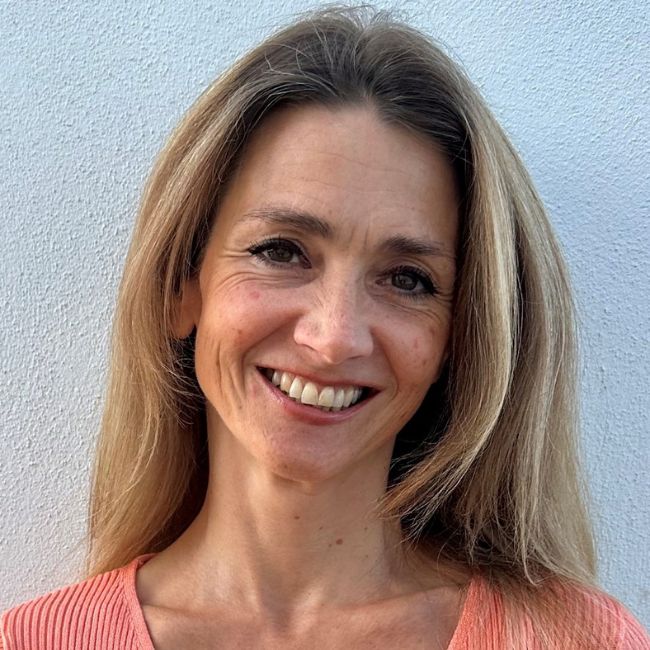
Hayley's Bio
Hayley studied Studio Ceramics in Cornwall, focusing on figurative work and Art as Therapy. She has extensive experience supporting people experiencing mental health challenges, providing opportunities for them to explore their thoughts and feelings through art and writing.
Hayley currently leads the Art and Design curriculum at her local Further Education College. She loves helping people realise their wide-ranging creative talents while building their confidence and self-esteem. In addition, she serves as the Designated Safeguarding Lead for the department, supporting students with safeguarding and mental health.
Diagnosed with MS in 2019, Hayley gradually embraced the Overcoming MS Program and healthy lifestyle changes. Overcoming MS has been an integral part of her journey, and she has actively participated in her local Circle, attended various events with Overcoming MS, and most recently participated in a Retreat in 2024 which left her feeling inspired and hopeful.
Hayley lives near London in the UK with her husband and two children.
- Learn the Program