- Get started
- Learn the Program
On this page

Your donation can help us create more episodes of the Living Well with Multiple Sclerosis podcast. Support us now.
Donate Now
Don’t miss the latest news, tips & resources
Subscribe now S8E23: Webinar Highlights — Psychological – what it really means to live with MS with Laura Crowder
Listen to: S8E23: Webinar Highlights — Psychological – what it really means to live with MS with Laura Crowder
Your donation can help us create more episodes of the Living Well with Multiple Sclerosis podcast. Support us now.
Donate Now In this episode of Living Well with MS — where we explore topics relating to living a full and healthy life with multiple sclerosis — we are pleased to welcome Laura Crowder as our guest! Laura is a health coach and Overcoming MS facilitator. In this webinar replay she unpacks the psychological impact of an MS diagnosis and practical strategies for improving mental wellbeing.
Watch this episode on YouTube. Keep reading for the topics, timestamps, and our guest’s bio
Topics and Timestamps
01:06 Introduction to Living with MS
01:07 Mental Health Strategies for MS
02:14 Understanding the Psychological Impact of MS
07:15 Navigating Emotions After Diagnosis
11:26 Understanding Multiple Sclerosis
13:05 Mind-Body Connection and Its Importance
20:49 Practical Strategies for Mental Wellbeing
28:41 Community Support and Resources
36:06 Q&A Session and Closing Remarks
Episode transcript
Read the episode transcript
Laura Crowder (00:00)
You know, I used to listen to loads of podcasts. I’d hear all these wonderful things and I’d feel really knowledgeable about it, but I never actually put it into practice. So knowledge is worthless if we don’t act on it. So why not give it a try?
You’ve got nothing to lose. Why not see how you feel? And the strategies that we’ve spoken about so far, especially having that realistic hope, should enable you to get started and bridge that so-called intention behavior gap,
Gina (01:07)
Today’s episode features audio from the psychological side of Living with MS webinar, part of the Living Well with MS webinar series. Overcoming MS facilitator Laura Crowder and myself, Regina Beach, explore mental health tips and strategies when living with the unpredictability of MS.
Gina Beach (01:29)
if we haven’t met yet, my name is Gina Beach. I am an OMSer.
I live with MS, I’m the producer of the Living Well with MS podcast, so you might recognize my voice and I’m joining you from the UK. And in a moment, I’m going to welcome Laura Crowder to the stage. She is an Overcoming MS program facilitator, a health coach, we’ll be exploring the psychological side of living with MS, which is a topic that can feel really personal and sometimes difficult to talk about, but we do hope that this session offers you a safe space to reflect and hear practical strategies for supporting your own wellbeing.
Laura Crowder (02:14)
Hi, Gina, and thank you so much. That was a really lovely intro. So yeah, as you said, my name’s Laura Crowder. I live with my family, including my two children, aged 16 and 20, in Cornwall in the UK. I became a schoolteacher and leader after some very troubled teenagers during which I definitely experienced challenges with my mental health. I was badly bullied. I was a persistent truant.
I even got excluded on a number of occasions from school. As an adult, I’ve experienced addiction. I finally ended my 13 year smoking habit by reading an amazing book called The Easy Way to Stop Smoking. Interestingly, a psychological intervention. I also developed severe anxiety and postnatal depression after becoming a parent. And I lost my wonderful dad to cancer in 2012.
In January 2018, after ending up in hospital a few months previously, I was diagnosed with relapsing remitting MS. And after transforming my health through the overcoming MS program, I decided to retrain as a health coach. And as you said, I also now work as one of the program facilitators.
For those reasons and many others this is a subject that is really close to my heart. I also think that sometimes it’s really easy to listen and think, it’s great in theory, but it won’t work in practice. Well, although when I was diagnosed with MS, I was no longer depressed, I did still have really bad anxiety, which was initially exacerbated by that diagnosis. However, I was incredibly lucky because I found the Overcoming MS programme very early on and I can honestly say that it’s helped me transform my health in every way, including, really importantly for today, helping me to understand and manage my feelings and emotions, including that anxiety. We all know that MS can look very, very different and that people experience a huge range of physical symptoms linked to the biological aspects of MS such as damage to the myelin sheath and inflammation. And those of us with a diagnosis of MS also know that there are many symptoms that are invisible and these include psychological symptoms. Some of these symptoms can be described as bi-directional. So for example, physical symptoms can lead to depression but depression can also lead to physical symptoms. So I think that’s quite important to understand. Another key aspect that is widely known to interact with the biological and psychological aspects of health are the social aspects linked to things like culture, socioeconomic status, career, education, family, And all of these things have a huge bearing on our health.
In fact, this quote from the World Health Organization explains that health is actually a state of physical, mental and social well-being and not merely the absence of disease and infirmity. And I really love that quote because I think it really does cover the aspects of health. So because these aspects are so intertwined, we will be touching on all of them today. But our focus is very much on the psychological.
Why have we chosen this? Well, a joint statement prepared by leading UK MS charities in 2023 reported that people with MS were two to three times more likely to experience anxiety and depression than the population as a whole but that support for people experiencing these issues was lacking.
And this is also in line with findings from the ESMP, that’s the European MS platform, and the CDC in the US and pretty much around the world, I think. Speaking of the CDC, I just want to share a very quick quote with you, which I found when I was looking at their website researching this webinar, because I think it’s so interesting. So often we consider psychological wellbeing after experiencing challenges. However,
This was a recommendation from a task force in Atlanta, Georgia, and they recommended that universal school-based cognitive behavioral therapy or CBT should be actually delivered to all students to reduce depression and anxiety symptoms, regardless of either the presence or absence of mental health symptoms. And I just think that’s so important because the strategies that we’re sharing are preventative as well as hopefully useful if you are experiencing issues.
Professor Jelinek, who wrote Overcoming MS, explains how unexpressed grief can lead to low mood or depression. And the problem with that is that this can actually lead to physical symptoms within the body. Now these are taken from UK National Health Service documents on anxiety and depression. So it shows how these feelings, we leave them unexpressed, can actually damage both our physical and psychological health.
Imagine also the impact on the social factors that we mentioned, maybe becoming isolated from people, experiencing difficulties at work and so forth. So what can we do? Well, in overcoming multiple sclerosis, Professor Jelinek recommends the following process. And I’m going to say it now, despite being really skeptical when I first discovered this.
I can honestly say that this process was a game changer for me. So first of all, it’s about accepting the situation, the reality of the diagnosis and the reality of potential losses that we might face in the future. Making sure that we avoid denial.
The next thing is considering support. We don’t have to do this alone. We can reach out for professional help, help from our family and friends, but we need that help so that we can actually learn how to feel these emotions. So for example, again, that grief around the diagnosis.
And it’s about, you know, learning to be comfortable feeling that uncomfortable sensation. And there are so many ways that we can do this. It’s got to be what works for you basically. Some people find journaling useful. For some people it’s movement, different types, depending on different emotions often. Music and art. Nature is a very common one. Meditation, sharing with others, talking things through.
So many different ways that people can get comfortable with feeling these uncomfortable emotions and ultimately releasing them. And then once we’ve learnt this process, applying it to any unresolved emotions we might be carrying. Now this was not something that occurred to me before diagnosis or before the retreat actually that I attended about a year after my diagnosis. And these unresolved emotions, it might sound very woo woo as I thought it did initially, but they use up really valuable energy and that’s energy that can not only make us feel quite poorly, but also we want to save it for healing. Now we just saw how feelings of anxiety, low mood and depression can result in physical symptoms, but so can stress. Now with anxiety and stress, there’s a biological reason we feel it. If we didn’t feel anxiety, we’d struggle to act in a dangerous situation.
It prepares us to either fight or flee from that situation, which is great if we need it. But the problem is when it becomes chronic and it’s the same with stress. There’s a lot of evidence showing how stress is linked to relapses in MS and inflammation, but it’s the chronic stress that’s harmful. And this diagram illustrates that too little stress can have a negative impact in terms of our performance.
Now with stress our perception is also key. How we view situations that occur, like the presentation, but also how we view the stress itself. Because studies show that people who perceive stress to be harmful actually do experience more harmful effects. I also think language is so important here and this is mentioned in overcoming multiple sclerosis.
So another tip, listen to yourself, not just your speech but your thoughts as well and consider which part of this curve is your language leading to. Now it does take practice and I still catch myself regularly after many years of using this strategy, but it really has helped me. Before we leave the mind body connection, I want to share this with you. Many people with MS experience chronic pain and I did recently in my upper back. I don’t know if it’s MS related or not, but I was told about this course recommended by the UK National Health Service, which is a self-management strategy for chronic pain. Now, not only did I find it incredibly useful because it significantly reduced my pain and still has, but it also struck me how similar this approach is to the Overcoming MS program, particularly to this psychological and biological interaction. So I just want to draw your attention here to a couple of the aspects of this program.
You know, there’s the brain-body link or the mind-body link. There’s the acceptance and there’s the managing moods. And I really feel that nowadays it’s so important that there is recognition of this mind-body connection. When Professor Jelinek first wrote the program over 25 years ago, this was not recognized.
So you’ve seen stories from the website and there are many more in the books and on the Living Well with MS podcast. Now these are taken from the overcoming MS handbook and in it, Dr. Garland explains that our reactions and decisions that we make in response to the diagnosis can actually end up determining the course of our disease. They can affect it. So he says it’s critical to express our emotions and accept the difficulties that the diagnosis prevents but he also says the steps or the pillars now of the Overcoming MS programme represent a path back to good health. And Dr Phil Starting also emphasises this. He says that the emotional resilience and mental strength are particularly important and that it’s possible to make lifestyle changes that alter the trajectory of the progression.
Phil has a diagnosis of progressive MS and he’s written an incredible chapter in the handbook about what it feels like and how he manages challenges. And I’ll give you another tip which we’re going to deal with. Mindfulness and meditation are a big part of his journey as well as my own. And that leads me really nicely onto the overcoming MS program itself because mindfulness and meditation are part of the stress management pillar. And they’re two techniques that are very evidence-based. the book also contains the evidence the program was originally based on, but it’s continually being updated in line with recent research.
So studies have repeatedly shown benefits to psychological health and wellbeing of meditation and mindfulness. And in 2019, a randomized control trial actually found that an online mindfulness intervention led to higher quality of life, lower anxiety and depression, and better sleep in people with MS, which is amazing. And similarly, many studies show the benefits of physical activity in helping those psychological as well as biological symptoms. And studies have shown physical activity can reduce anxiety and depression. Other lifestyle factors covered by the program, such as diet and vitamin D, have also been shown to be associated with fewer perceived cognitive difficulties.
So we talked about understanding that feelings can be a real issue after diagnosis and do you know what, for people in general. And a really good tip that I discovered was understandings that feelings are not good or bad, they’re just feelings. So for example, anger, it causes wars, but it also led to me being here because I felt angry that so many people diagnosed with MS are told there’s nothing they could do.
Also, empathy is often seen as a really positive emotion when we’re having empathy with or for someone, but it can also result in emotional burnout if we are taking on too many of other people’s emotions and that can be damaging to our physical and mental health. So feelings and emotions can become toxic and I’m sure you’ve heard of this. So we saw earlier that if we don’t express grief, it can turn into depression, but also denying feelings and always saying, I’m fine, I’m fine, whether that’s to ourselves or to others. That’s known as toxic positivity and it’s toxic because it really can damage our health. Similarly getting stuck in negative emotions as we saw earlier with grief also damages our health. But through mindfulness and meditation that we mentioned earlier from the stress management pillar, and especially evidence-based, mindfulness-based stress management courses, they don’t only help us manage these emotions, but they can also help us change our perception of illness. Now, I remember when I did one of these MSBR courses and John Kabat-Zinn, who was very influential in the mindfulness movement coming over to the Western world, he talked about, you know, when we change our relationship to illness, you realize that you are a lot bigger than your illness. And he talks about dropping into being. He talks about humans rather than being human beings, we’re all often acting as human doings. So he talks about the need to befriend our body as it is, not thinking about fixing it. And that healing is all about that acceptance with coming to terms with how things are in the present moment.
And I think many people, including me, find that this really can shift our emotions with this type of practice. I realized that I was hardly ever in the present moment. I was always worrying about something in the future or ruminating about things in the past. And mindfulness for me and many others was a gateway to help me manage my emotions, my thoughts, my feelings, and actually lead to me to become to feel more balanced, more empowered and more in control of my health.
So first of all, self-compassion of all the things that come first, you may not have thought of this, but after dealing with that grief associated with diagnosis, it’s a vital component. And I think if I’m honest, subconsciously, I probably thought along the lines of, I haven’t got time for all this woo woo stuff. I need to get on with changing my diet.
But I can say this, and I was a yo-yo dieter for many years pre-OMS. If you don’t love or even like yourself, you will not make the best health choices, whether that’s to do with diet, physical activity, stress management, health in general, especially on difficult days.
Just a tip as well. I used to think self-compassion was very fluffy and gentle and sometimes it is, you know. If the balance is tipping the wrong way and we’re going into that kind of burnout, you know, that’s when we need a gentle reminder to tip us back into balance. But self-compassion can also be fierce. And I often use this, especially for physical activity and stress management because despite becoming addicted to many other things during the course of my life, never managed to become addicted to any form of movement. So a tip I found is give yourself compassion of voice. My gentle voice is a meditation teacher called Sarah Blondin. She pops into my head and my first voice is an ex-Navy seal called David Goggins, who I discovered in 2019 when I was training for my first half marathon. He definitely gets me active.
Overcoming MS (19:37)
Are you ready to connect, learn, and feel inspired? Register your interest in our latest events and courses by visiting overcomingms.org slash events to find out more.
Laura Crowder (19:51)
The next tip is learn, learn as much as you can. Now you’re nailing this already because you’re here on this webinar, but really I would encourage you to learn about yourself. How do you work? Because this is something that no one else can teach you. Coaches can guide you. There are personality tests available, but again, they’re only a guide. You are your own expert and become an expert on yourself. In terms of other learning, focus on evidence-based sources. Obviously, RMS is extensively evidence-based. The original studies can be found in the book and the recent ones on the website, as I said, but be careful with social media because unfortunately the MS space does contain a lot of toxic positivity and toxic negativity. But the huge evidence base that actually supports lifestyle change gives us hope.
It did for me, and it is the word that comes up so often when you speak to people following the program. hope is not just again a nice concept. Hope has been studied and it’s been found to have stress buffering effects for people with MS. So it actually again is evidence-based. Now, if you’re finding it hard, if you are currently feeling depressed and thinking, how on earth am I supposed to find, feel helpful? Obviously we’ve talked about ways of managing those emotions, but a really useful strategy for me and other people who said they found it so useful. Find change mentors, okay? I talk about this in pathway sessions and share mine. I’m continually adding to the list. They can literally be anyone. So Sarah Blondin, David Goggins are two of mine.
Mine also include an Olympic athlete and a mountain climber, both of whom have a diagnosis of MS. But do you know what? I’m not trying to emulate their physical achievements. What I’m interested in is what I can learn from them in terms of how they think, if you like their psychological side. And I’ve learned so much from people. It’s also so important to find people who had a similar starting point to where you are now.
So it’s all very well having those Olympic athletes and people like that. But you need people who are in a similar position to you now, whatever your situation looks like. Find people who were there and have made positive changes that inspire you. That really will show you hope and give you something to fall back on on tricky days. Another tip is perception.
We’ve always got a choice of perception. Now, when I first started making the lifestyle changes, I had missed most of these psychological, well, I think actually all of these psychological strategies that we’ve spoken of. I’d skipped over this part of the book So I found everything really, really hard because my actions in terms of the changes I’d made and my perceptions, we’re in a massive conflict. So for example, I’d stopped eating dairy cheese, which was my favorite food in the world and milk chocolate, my second favorite food, but I was so miserable as I still felt so attached to those things emotionally. So working on our perception is really important. Similarly, as we talked about with the mindfulness with the John Kabat-Zinn, letting go of our expectations around our future health and that’s, been game changing for me because it reduces that fear, it reduces that sense of overwhelm and really focuses us on that present moment or this present moment. All of this is so empowering. It literally starts to happen naturally as a result of these strategies that we’ve spoken about. And again, it’s scientifically backed. A report from the World Health Organization actually showed that patients who felt empowered had better health outcomes. Another important one here is experience. You know, I used to listen to loads of podcasts. I’d hear all these wonderful things and I’d feel really knowledgeable about it, but I never actually put it into practice. So knowledge is worthless if we don’t act on it. So why not give it a try?
You’ve got nothing to lose. Why not see how you feel? And the strategies that we’ve spoken about so far, especially having that realistic hope, should enable you to get started and bridge that so-called intention behavior gap, which we do have resources on in the Livewell Hub. Again, making these changes, however small they might be at first, puts you back in control of your health. And as many people who follow MS say, in control of your life.
We’ve all got different starting points and different personalities. So jumping straight in and making changes to every pillar suits some people, but it would throw others into that psychological, stressed, anxious state where they’d be likely to freeze. I’ve seen that with lots of clients. It’s very common.
Others respond really, really well to micro habits. So breaking everything down to tiny, tiny steps. And that enables some people to build really positive habits, whereas other people get bored and switch off using that approach. That’s why understanding how you work is really key. And the pain course I mentioned earlier referred to boom and bust pacing.
Doing too much one day can lead to enforced rest on the next day. So getting the pace right for you is key. And often with things like physical activity, that can mean breaking it down into much smaller sections throughout the day. Self-talk was mentioned. If you’ve got an inner critic, turn it into an inner coach. There’s a widely evident strategy in CBT called cognitive restructuring, and it’s brilliant for helping to reframe negative thoughts. So again, look it up, try it out. Feeling positive, Now this doesn’t mean being toxically positive. This means finding real pleasure in day-to-day life. And if this is something you’re not currently experiencing as a result of the situation you’re in, Dr. Rachel Hunter has some excellent practical ideas and activities for finding pleasure in her chapter on developing resilience in the Overcoming MS Handbook. Reflection is also so important. What’s working? What isn’t working? How do you feel and which strategies are positively impacting your psychological and overall health? Professor Jelaniq encourages us to be curious. This is a big part of finding out what works for us.
In terms of both our psychological health and our health in general and flexibility is another psychological quality that he emphasizes. It’s really easy to get stuck in our own ways and that can make making those positive changes that LMS outline really really hard. A really good strategy with this is if you find this hard don’t try and make changes to your health.
Do it in another area that’s completely unrelated and something that you don’t feel any emotion towards. So Professor Jelinc in the book speaks about swimming pool changing rooms. So actually always using the same changing room until one day he decided to try a different one and finding it was better. And then after that, realizing how important that flexibility can be. Try brushing your teeth with a different hand. Try taking a different route to somewhere that you go regularly, you know?
Get comfortable with feeling uncomfortable. Get your brain used to making these changes and understand that it’s not threatening. And do know what? This takes us back really nicely to self-compassion. this is an ongoing process. I like to think of it as a bit like going to the gym. If you go to a gym, you work away, you suddenly get to a stage where you feel, my fitness level, I’ve got the body in my dreams, the fitness level in my dreams. But if you stop going to the gym at that point, you won’t maintain that level of fitness. And as pillar seven explains, this change is a change for life. In fact, for me now, I don’t consider this to even be a program. It’s just my way of life. And our psychological wellbeing is so similar to that gym analogy.
It does require that continuous practice.
OK, on to the next question, which is. I sometimes find that my sleeping pattern isn’t great. I become stressed and anxious. Any ideas for getting better sleep? Well, first of all, sleep is bi-directional. It affects our psychological wellbeing. It affects our biological wellbeing.
Sleep affects our cognitive issues, something I’ve really experienced in terms of those psychological issues.
Now these were the tips presented by Neil Stanley, PhD, who’s a sleep expert who presented at the Living Well Live.
Absence of regular thought process about sleep. I was constantly telling myself that I wasn’t sleeping, that I was worrying about it, that I was struggling desperate. In fact, it became a constant thought process. Now I haven’t found a miracle sleep cure, but it’s so much better since I decided to stop worrying about it did one of the CBTI courses, that’s CBT for insomnia, and many of those are freely available again from your local health authority. So some resources to share with you. First of all, I don’t want you to think this is something you need to do alone. If you’re looking for mental health support, check out the mental health hub on the Overcoming MS website. If you’re new to Overcoming MS, why not attend the Discover session?
Or if you want to expand your knowledge and evidence-based, go on a pathway. If you’re planning on making these changes and want some support, we’ve got the six month course. Also, there are dedicated sections on the website for every pillar, including functional movement exercises with Dr. Gretchen and chair-based and standing yoga exercises as well. And last of all, the importance of community can’t be overstated. We saw at the beginning in that bio-psycho-social model that it is another factor that affects our health and even with very supportive families and friends, it can be really hard for them to understand. Joining the LiveWell Hub will give you access to a community that gets it as well as all the resources and circles which have been a lifeline for me. I’ve made some real friends in my overcoming MS circle but also found a safe space.
The Circle I belong to has an amazing meditation WhatsApp group where people do share issues that are affecting their psychological wellbeing. And I know that people find it useful because we are always saying how useful it is.
Grounding, for me, that often involves being in nature and breathing and if I can’t get outside as Angela who runs our circles meditation group says, open the window or the door and let nature come in, nose to the breeze she always says that those grounding and breath work exercises can be so useful, especially if we’re in a moment where we’re really feeling that stress and nothing else is working. Some people find movement like yoga, even boxing, boxing a pillow may be useful. Other people use their senses, tapping or even cold water on the wrist. There isn’t any perfect answer. It’s finding what works for you and also focusing on things that you can control. When Professor Jelanick wrote the Overcoming MS programme, he had a sign on his wall saying the process is the outcome and letting go of those expectations, like we said, can enable us to really focus on the present moment. And if you think about it, what we are doing right now is actually helping to create our future.
This is from Linda Bloom, our charity founder. She speaks again about empowerment, but she says that she would recommend three things. Speaking to people who’ve empowered themselves already, listening to and sharing those stories. And finally, believe in yourself.
You have the inner resources that you need to live a full life after this diagnosis of MS. Another quote here from Professor Gavin Giovannoni, who some of you might know. He wrote this in the introduction to the 2016 edition of the book. Overcoming multiple sclerosis makes you think deeply about wellness. And the inspiration you get from it is that you, yes, you could set out on a journey of empowerment and change the way you live for the better. And remember how we said the World Health Organization said empowerment leads to better health outcomes. And from Professor Jelanić himself describing his journey after a lot of years of following the Overcoming MS program, life was very different because I was fundamentally different. But listen to how he says he was different. My passions, goals, desires, the whole inner landscape of my life were different. I had changed and while it was incredibly challenging, overall I was glad I had changed MS or no MS. And this is what the Overcoming MS Program advocates, change your life for life. Couldn’t say it better myself other than Angela, again, who I mentioned, who is a wonderful member of the Overcoming MS circle I belong to. She said this a couple of years ago in our thread to a newly diagnosed member. The page has been turned and now you’re living on a fresh one. Your story is yet unwritten. So lean on us, other members of the circle and the wider Overcoming MS community, ask questions, challenge yourself to find solutions and be proud of the person you are. Professor Dillon, it makes it clear that the Overcoming MS program can’t promise to cure all your physical symptoms, although many people experience huge improvements, I have myself, but by doing what that mindfulness suggests and focusing on being rather than doing, we can ensure that we take care of our psychological health and that can certainly improve our quality of life.
Gina Beach (35:00)
Thank you so much. Laura, you packed so much into such a short amount of time. We have some pre-submitted questions So the first one is, do you have a go-to self-care routine?
Laura Crowder (35:15)
Well, as someone who’s quite neurodivergent, I’m not great with routines, but I do love a good bath, I love a good book, I love getting outside in nature and I love any type of movement. Also, if I have enough time, know, preparing a real treat of an overcoming MS meal, So yeah, all of those things and listening to my favourite music and maybe like dancing along to it if I can.
Gina Beach (35:43)
Nice. think for me, I want to get up and I want to take a shower in the morning and I want to start my day and I want to put on real clothes, even if I’m having an at home day. even if I can do nothing else, it puts me in a state of like, okay, I’ve prepared myself. I’m ready for whatever this day brings to me. and I find that I feel better on days when I follow that, even though it’s such a, seemingly small simple thing it makes me feel like I’ve already accomplished something by the time I actually get my day started. do you stay motivated to try new things even when MS makes it hard? I feel like I was more adventurous before having MS and now I’m a super over thinker.
Laura Crowder (36:24)
Okay so I’m a fellow over thinker, hi! I’m still an over thinker but I think I’ve changed my relationship with those thoughts so that’s been really important in helping to motivate me. I believe that motivation is something we grow, I don’t believe it’s something we either have or don’t have and I think that willpower is overrated. I think that it’s the steps, it’s the practice, it’s the showing up, it’s what I said about taking that experience and acting on it, know, taking that knowledge and acting on it. And I just find it doesn’t matter if it’s a baby step, it doesn’t matter. Like there are some days when I have fully intended to do some physical activity and for whatever reason, I don’t do it. Do you know what? That’s okay.
And in terms of the adventurous, I’ve become more adventurous again since discovering overcoming MS, the anxiety I spoke about prevented me doing so many things in my life. I stopped traveling, I stopped doing anything that I thought had any sort of risk. At one point when there was a swine flu outbreak, I even stopped going out of the house. So I get it. But all of these techniques that I’ve talked about and other ones that you’ll discover through the overcoming MS resources have just really helped me get motivated.
Gina Beach (37:49)
And I think you can use that overthinking to help plan for contingency. And I think getting out of the house every day or as many days per week as possible, even if it’s literally a tiny walk around your neighborhood or I have my mobility scooter set up in the garage where I can go out and just do a little errand, take myself to the post office or buy something from the shop. And those help you practice being adventurous. The more you can do by yourself and you can say, I did this, I did this by myself and then the next time maybe you can go a little farther or do something else and I also think there’s such benefit to calling ahead and saying, hey, do have step free access? Hey, can you meet my dietary requirements? People are so willing to help if you are willing to be vulnerable enough to ask for help and they want to help you be adventurous. I know my husband’s like, you know what, it looks different but we’re still going to do all the things, we’re just going to find a way to do it that we can do it together. using that overthinking instead of catastrophizing to be an organized planner so that you can be in charge of your own destiny.
Wonderful. All right. And on that note, I think we’re going to need to come to a close, but this has been so wonderful. I’ve learned so much. I really honored to be a part of this. So thank you again, Laura, for bringing us all of these wonderful resources and this wonderful reminder that there is a lot in our control and that we can, work towards mastering our mind and that’s the first step in making all of these healthy decisions.
Laura Crowder (39:25)
Bye.
More info and links
- Check out other episodes featuring Laura
- New to Overcoming MS? Learn why lifestyle matters in MS – begin your journey at our ‘Get started’ page
- Connect with others following Overcoming MS on the Live Well Hub
Laura's Bio
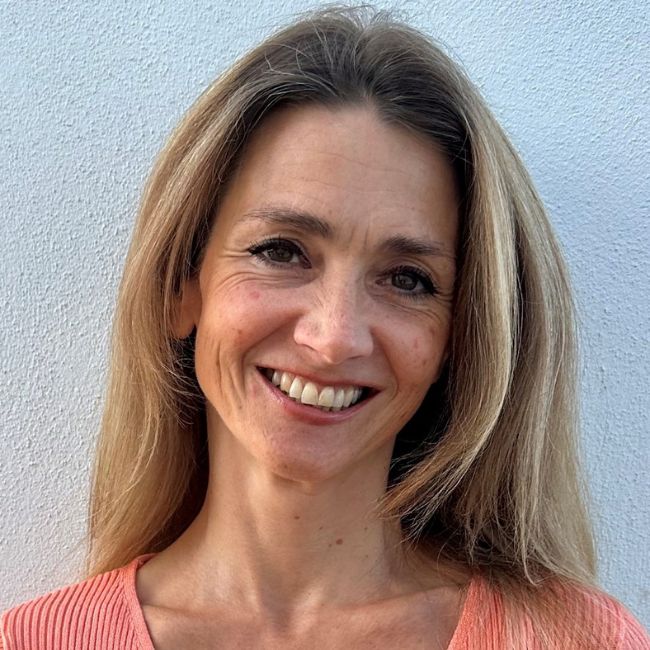
Laura is a Health Coach who empowers her clients to make lasting, positive change.
She read Overcoming MS by Professor George Jelinek while recovering from a relapse that left her struggling to walk and talk and immediately began to implement the steps outlined in the program. She attended an Overcoming MS retreat in 2018 which she describes as ‘life changing’ and is an active member of her local Overcoming MS Circle. Five years after diagnosis, Laura is relapse-free and happier and healthier than ever before.
As a Health Coach, Laura finds that most people already know that they would be healthier if they ate more whole foods, moved more and stressed less. The issue for many (including herself pre-diagnosis), is that despite knowing this and wanting to be healthier, they don’t apply this knowledge. Laura believes that this is where stories come in. She works alongside clients as they create more empowering stories that lead to lasting, positive change.
Laura is currently working hard to qualify as a personal trainer as movement has been a fundamental part of her Overcoming MS journey. She also believes that it’s a key component of a healthy lifestyle that everyone can adopt and one that she’s keen to share with clients.
Laura lives in Cornwall with her husband, two teenage children and a rather naughty Jack Russell. She enjoys reading, spending time with her family, exploring the South West Coast path and she completed her first marathon this year.
- Learn the Program