- Get started
- Learn the Program

Get the latest news, events and research on multiple sclerosis from the Overcoming MS newsletter
Subscribe Here
Don’t miss the latest news, tips & resources
Subscribe now
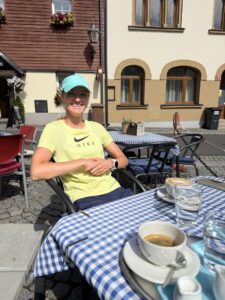
Lenka’s story
Get the latest news, events and research on multiple sclerosis from the Overcoming MS newsletter
Subscribe Here My diagnosis
Six or seven years before my diagnosis, I began to feel that I could not fully control my legs. They sometimes felt as though they did not belong to me. I was competing in triathlons and training heavily, so I assumed I was overtraining and that the problem would pass.
Physiotherapy did not really help. My GP thought the problem was a blocked sacroiliac joint. Treatment and taping brought some improvement, so once again I believed I simply needed to find the right exercise.
I was finally diagnosed with PPMS in February 2025. I could not believe that something like this could happen to me. I had lived a very healthy life and never experienced a major health problem.
I was frightened by what the diagnosis might mean for me, my partner, my life and my future. I worried that I would lose the activities I loved. I felt powerless and alone, and I was afraid to tell anyone at work because I did not want people to look at me with pity.
I was told that treatment might slow the progression but that my symptoms and physical ability were unlikely to improve. When I asked what I could do myself, the advice was to exercise slowly and moderately within my limits. I was also offered antidepressants, which I chose not to take.
What helped me
I searched for a podcast that could tell me what I might do for myself and introduce me to positive stories from other people with MS. That was how I discovered Overcoming MS.
It felt different from the other podcasts and websites I had found. It gave me hope and clear actions I could explore, supported by research. I do not follow every recommendation strictly but I already have a very healthy lifestyle.
What Overcoming MS gave me was reassurance that many of the things I was doing made sense. I am gradually adding other changes and paying attention to how they affect my life. The website and podcast have also helped me understand MS and new research, while the community has made the experience feel less lonely.
What changed
I reconsidered my priorities and what success means to me. I no longer want to keep climbing the corporate ladder simply because that is what I once expected of myself. My relationships and the way I experience my everyday life matter more.
The biggest practical change has been at work. I protect my boundaries more carefully, say no when I need to, try to keep stress manageable and defend my free time.
My mindset has changed too. I deliberately make room each day for enjoyment and for the people I love. I understand how quickly life can turn upside down, and I do not want to keep waiting for the right time, the right circumstances or someone else’s permission.
What still is not easy
My symptoms remind me of MS every day. My greatest challenges are balance and lifting my legs, particularly my left leg. I experience stiffness in my lower back and glutes, as well as fatigue, bloating, bowel problems and occasional changes to my vision.
I remind myself how much work I have done since diagnosis, how much I can still do and how grateful I am for the people around me. A difficult day, week or month does not erase the progress I have made or my belief that further improvement may still be possible.
Life today
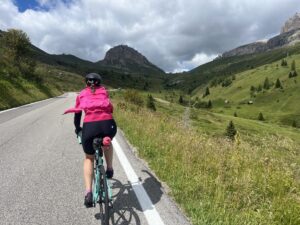
At the time of my diagnosis, moving around my apartment was difficult and even a walk around the block felt challenging. Today, I am swimming, cycling and hiking again. Sometimes I can manage a very short, slow run. I also do yoga, Pilates and breathing exercises.
Work feels more satisfying because I protect my work-life balance and communicate my boundaries more clearly. I recently married, and I have a wonderful, supportive husband, family, friends and colleagues.
I cannot train or compete as I did before, and my sporting life still has limits. But I am deeply grateful that I can take part in activities I enjoy and spend time with people I love. Seeing my own progress gives me hope, and research into new MS treatments gives me hope for the future too.


Nobody Told Me… small steps have a massive influence over my MS
- Learn the Program