- Get started
- Learn the Program

Get the latest news, events and research on multiple sclerosis from the Overcoming MS newsletter
Subscribe Here
Don’t miss the latest news, tips & resources
Subscribe now
Nicole’s story
Get the latest news, events and research on multiple sclerosis from the Overcoming MS newsletter
Subscribe Here My diagnosis
My route to diagnosis began in October 2024, when I saw my GP about numbness and pins and needles in my feet. Blood tests led to a vitamin B12 infusion, and I was told to return in three months if the symptoms had not improved. They did not, but before I could go back, something unexpected happened.
In January 2025, I fell from a ladder while painting outside of my house. I cut my head and had concussion, so the emergency department arranged a CT scan to check for bleeding. There was no acute bleed, but the scan revealed something abnormal in my brain that had nothing to do with the fall. My head was stitched, I went home and an urgent MRI was arranged.
The MRI in early February showed extensive lesions on my brain. I was referred to a neurologist with suspected demyelinating disease, and MS was one of the possibilities. At the appointment, the neurologist told me that the evidence might be enough to diagnose MS if I wanted, but that some of the tests were also “unconvincing” and we could wait. It was an overwhelming and bizarre position to be placed in. At that stage, I was diagnosed with radiologically isolated syndrome.
Before my follow-up in April, I developed optic neuritis. The diagnosis changed to clinically isolated syndrome, and I was referred to for a lumbar puncture, further blood tests and ophthalmology. In May 2025, I was diagnosed with RRMS. I began Ocrevus the following month. A later spinal MRI, delayed until December, showed several lesions in my spinal cord too.
What helped me
I found Overcoming MS as soon as the first MRI revealed lesions in February 2025. I attended my first live event that April, before my formal MS diagnosis.
I have already done a great deal of reading and begun introducing some of the recommendations. When I asked the neurologist about lifestyle, I was told there was little specific I needed to do beyond not smoking, possibly taking vitamin D and eating healthily. That did not fit with everything I had been learning or with my need to take an active role in my health.
The Overcoming MS approach made sense to me from the beginning. I started with food and exercise. I ordered the Overcoming MS handbook, and it became a guiding star. In a situation filled with unknowns, it helped me identify choices that were within my control.
What changed
I now exercise four or five times a week. My whole attitude to movement has changed: it is no longer a chore or something I simply have to do. I see being able to exercise as a privilege.
My first response to the diagnosis was fear. I am an occupational therapist and had learned about MS at university 20 years earlier, but I had worked mainly in mental health since then. What I remembered was limited to declining mobility and wheelchairs.
I immediately felt that I should end my relationship of more than 15 years to set my partner free. I grieved a future in which I would lose mobility and independence, and I did not want him to become my carer. After many emotional conversations, he reminded me that staying was his decision to make. He stood beside me and supported me throughout.
Gradually, I shifted the energy I had been spending on fear towards the things I could do to support my health and live well with the diagnosis.
What still is not easy
Stress management, meditation and mindfulness remain the hardest parts for me to sustain. When life becomes busy, they are the first habits to slip.
When I was diagnosed, I was working part time and had intended to increase my hours quickly. Instead, I chose to remain part time for a year while I researched, grieved and found my feet. That gave me the time and energy to make positive changes.
I have now returned to full-time work and maintained the changes to food and exercise, but balancing work with rest, stress management and meditation is still an ongoing process. I do not have it all mastered, and I am learning not to treat that as failure.
Life today
My life is great. I would not wish an MS diagnosis on anyone, but it has given me a new perspective on health, well-being and time. I live more in the present instead of postponing life until retirement.
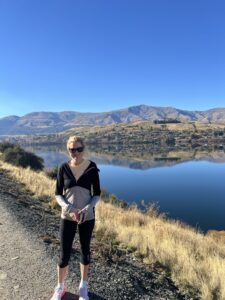
My partner and I moved to Queenstown so that we could spend more time doing the things we love while we can: hiking, skiing and cycling. I see ordinary tasks differently too. Taking out the rubbish, emptying the dishwasher or hanging out clothes used to feel like chores. Now I recognise the privilege of being able to do them.
I notice small moments of beauty; during Daffodil Day in New Zealand. I bought daffodils to support family and friends going through difficult times, and their colour brought me joy all week.
I am also hopeful about the amount of MS research underway, and the progress made in treatment over recent decades. I believe there will be further improvements in the years ahead.


Nobody Told Me… uncertainty would be the hardest part of living with MS.
MS is often described as a “snowflake disease” because everyone’s experience is different. At first, I found that intensely frustrating. I wanted someone to tell me whether I would still be walking in 10, 20 or 30 years, whether I could keep working, whether I would remain independent and which symptoms I would develop. I quickly learned that nobody could give me those answers.
The occupational therapist in me wants to weigh up the advantages and disadvantages, reach a reasonable conclusion and make a plan. MS has required me to adapt to questions without answers.
It has changed my life for the worse and for the better. I would never choose to have it, but it has given me a perspective I might not otherwise have developed. I still do not know what my future with MS will look like. I have learned that I do not need to know exactly what the future holds to live a really good life today.
- Learn the Program