- Get started
- Learn the Program

Early Symptoms of MS in Women and Men
Explore this sectionEarly signs of Multiple Sclerosis (MS)
Multiple sclerosis (MS) can be difficult to diagnose, because symptoms often come and go, can mimic other conditions, and vary widely from person to person.
In some cases, the earliest MS symptoms may be a single occurrence that may not lead to a definitive multiple sclerosis diagnosis, but instead be classed as Clinically Isolated Syndrome (CIS), or another condition that is yet undiagnosed. If in doubt about your symptoms, always ask your doctor.
These early signs often reflect the most common symptoms of MS. That’s why early recognition and professional evaluation are crucial. An early diagnosis can lead to timely treatment, which may slow disease progression and help manage symptoms more effectively.
Early signs of MS in Females
Multiple sclerosis (MS) is significantly more common in women than men. It has a higher prevalence in women across most regions and populations around the world with Public Health England recording that approximately 70-75% of people with MS in the UK are female. Source: The PHE Neurology Dementia Intelligence team.
Femles are more likely to be diagnosed with Relapsing-Remitting MS (RRMS) than men, the most common form of MS (65-75% of cases at outset). As MS can affect more women than their male counterparts, it’s important to recognise the signs of MS in females and understand the 1st symptoms of MS – including those more common or severe in women.
MS Symptoms More Common or Severe in Females:
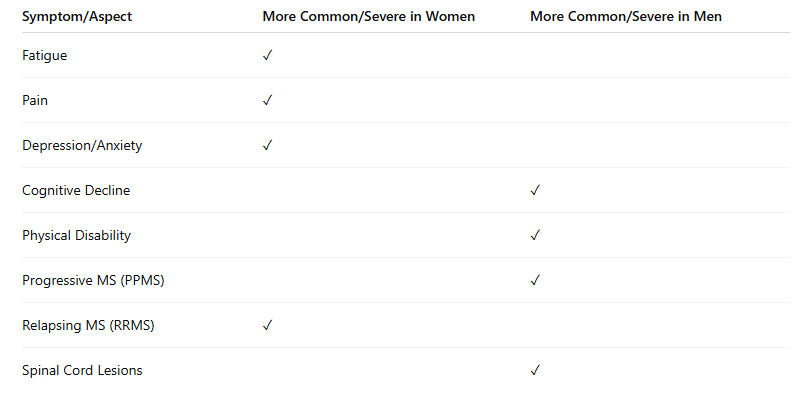
- Fatigue: Frequently reported as more severe and persistent in women.
- Pain: Women tend to report more neuropathic and musculoskeletal pain.
- Depression and anxiety: These are more common in women with MS.
- Bladder dysfunction: More common and often more troublesome for many women.
- Relapsing-remitting MS (RRMS): Women are more likely to be diagnosed with this form, which is characterised by flare-ups and partial or complete remission of symptoms.
Estrogen (one of the main female hormones) is thought to have a neuroprotective effect, which may partly explain why women typically experience a less aggressive disease course early on.
MS symptoms can fluctuate with menstrual cycles, pregnancy, and menopause in women, suggesting hormonal effects. MS symptoms can worsen around the time of menopause and there is a significant crossover between MS and menopause symptoms.
Early signs of MS in Men
While women are still more likely to be diagnosed with MS overall, men are slightly more likely to have Primary Progressive MS (PPMS). Men also tend to have later onset and often experience a more progressive course of MS. Below you can also find some of the signs of MS in men that are more common or severe than in women.
MS Symptoms More Common or More Severe in Men:
- Cognitive decline: While both sexes can be affected, men may experience more pronounced cognitive impairment (e.g., processing speed, memory).
- Motor dysfunction: Men tend to experience greater physical disability and faster progression, especially in primary progressive MS (PPMS).
- Spinal cord lesions: More common in men and may contribute to worse mobility and coordination issues.
- Worse prognosis overall: Men are more likely to have a progressive form of MS from the outset and tend to accumulate disability more quickly.
- Balance and coordination: Men with MS may notice unsteadiness, clumsiness, or difficulty walking smoothly because nerve signals that help control movement can be disrupted.
- Muscle spasms: Tightness, sudden jerks, or uncomfortable muscle stiffness, especially in the legs, can occur when MS affects the nerves that regulate muscle tone.
- Muscle weakness: Weakness in the arms or legs can develop when MS interrupts the nerve pathways that help muscles contract effectively.
- Fatigue: Many men experience overwhelming tiredness that doesn’t improve with rest, often due to the extra effort required for muscles and nerves to work around MS-related damage.
- Emotional changes: MS can lead to mood shifts, irritability, or feeling low, partly from the condition’s impact on the brain and partly from the daily challenges of managing symptoms.
It is also thought testosterone may play a role in the more severe disease course in men, but research is currently ongoing in this area.

Get Started with the Overcoming MS Program
Want to know more? Discover the history and evidence that provides the foundation for Overcoming MS and the Program in this short email series.
Summary Table of Common Early Signs of MS in Men and Women


Get the latest news, events and research on multiple sclerosis from the Overcoming MS newsletter
Subscribe Here
Discover the most common early symptoms of MS
Many early symptoms of multiple sclerosis are caused by inflammation or damage along the nerves in the brain and spinal cord. These signs can come and go, vary in intensity, and look different from person to person—but some patterns are especially common in the early stages.
Common early signs and symptoms of MS include:
- Numbness or tingling in the face, body, arms, or legs
- Vision problems, such as blurred vision, double vision, or pain with eye movement
- Weakness in one or more limbs
- Balance and coordination difficulties, including unsteadiness or dizziness
- Fatigue that feels overwhelming and out of proportion to activity
- Muscle stiffness or spasms, often in the legs
- Bladder changes, such as urgency or frequency
- Cognitive issues, like trouble focusing or memory lapses
- Emotional changes, including mood swings or low mood
- Learn the Program